
Welcome to the 19th Masonic District (Prince Hall Affiliate)
Our district encompasses Bexar, Comal, Cameron, Hidalgo, Uvalde, Kendall and Medina counties.
Introduction to Freemasonry
Masons, as a rule are very circumspect when it comes to discussion with non-Masons about Masonry. Some members are so careful that they are afraid to even mention the things that everyone knows about the organization. This probably because they believe that Freemasonry is a “secret society”, and that members are forbidden to talk about the association with non-members. This is a mistaken idea and there are many things that Masons can tell their non-Masonic friends. Let us consider a few of these. The first questions that are usually asked by non-Mason are “What is Freemasonry?”. There are many definitions of the word, but non is complete because the organization embraces a wide scope of activity. But a short definition is: Freemasonry is a fraternal organization, religious Brotherhood of man, which does charitable work in the community and among its members, and through its teachings and ceremonies seek to make good men better, and thereby make the world a better place to live in. Freemasonry is voluntary association in that no one is invited to become a member. As a matter of fact it is a violation of Masonic law for any member to invite anyone to join the Craft. The prospective member must truly come of his own free will and accord.
Freemasonry is not a religion. Sometimes outsider’s claim that the Craft is a religion, yet, we know this to be untrue. Masons don’t look upon Masonry as a religion or church, but that most Masons belong to an established church, and fact that one can’t become accepted unless he believes in God or the existence of a Supreme Being. Yet there is no religious test applied to the prospective member nor is he required or asked to subscribe to any religious tenet or dogma. It is forbidden to discuss religion or politics in the Lodge.
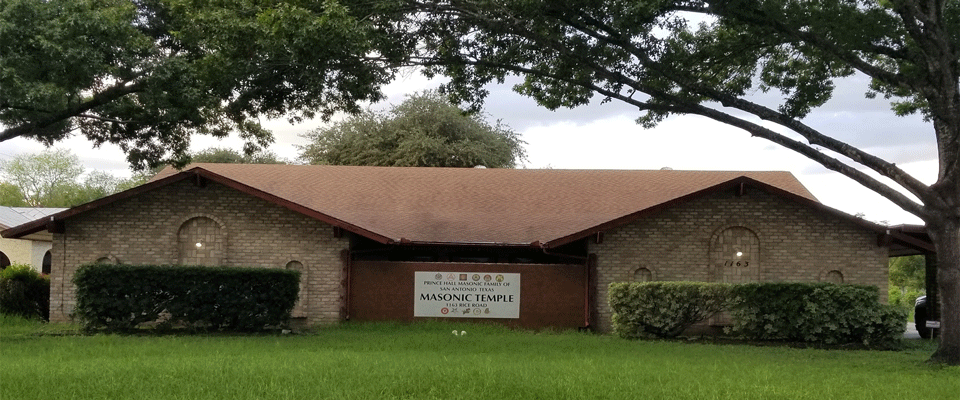
Freemasonry is not a secret society because it does not hide its existence, members don’t hide their membership. The organization meets in buildings located on public streets, announces its meeting in newspapers, magazines, engraves the words “Masonic Temple” on many of its buildings, and has homes for orphans and the aged. Like most organizations are has some secrets, but it is not a secret society.
We can not of course, discuss the ceremonies, passwords, and other matters of confidential nature, but you may know that there the three degrees of Masonry consist of a ceremony of strictly serious nature, without horseplay, which teaches basic moral truths in a ritually impressive and solemn manner. The ritual contains a philosophy of life which provides the new member with something on which to build hope that is eternal. Each candidate takes part in a ceremony of initiation, is then advanced to the second degree, and latter promoted to the third degree. Promotion depends on his proficiency in learning certain things relating to Freemasonry, its ethics, and its philosophy. No man ever took the degrees without becoming a better man. The basic ethical principles exemplified in the ceremonies of the degrees are such as are accepted by all good men. They are lessons based on the golden rule, tolerance towards all men, respect for ones family, charity towards all, and being true to God, teaches charity its broadest sense and shows each member how to live a better life.
We need not be afraid to discuss Freemasonry with non-Masons. Thousands of books have been published on the subject of the fraternity. It is our Order, one of the greatest organizations of the world; has secrets and those should not be discussed.